
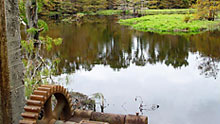
Both the Atlantic and the Gulf drainages of Georgia are covered, through the Florida panhandle... more
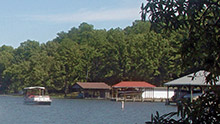
The four ecoregions of North Carolina drain toward the Atlantic through six major river systems... more
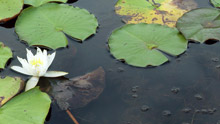
Although perhaps not as environmentally heterogeneous as neighboring states, South Carolina does include... more
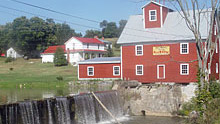
The survey reported here is focused on the eastern 75% of the state, draining from the Blue Ridge to the Atlantic... more
All waters draining into the Tennessee River above the Alabama line, including SW Virginia, W North Carolina, and N Georgia... more
A study area of approximately 150,000 km2, including Delaware, Maryland, New Jersey, eastern Pennsylvania and the West Virginia panhandle... more

A survey of all waters draining into the Ohio River upstream from the mouth of the Tennessee/Cumberland at River Mile 920... more
> Habitat & Distribution
Antrobia culveri appears to be endemic to its type locality in Taney County, SW Missouri. The single known population inhabits a stream running through Tumbling Creek Cave, about 40 km E of Branson. McKenzie (2003) reported maximum population densities on the underside of rocks in areas of Tumbling Creek that have little or no silt." FWGNA incidence U, unranked.
> Ecology & Life History
A broad-brush review of the zoogeography of North American cavesnails has been offered by Hershler & Holsinger (1990). Subterranean karst waters are, of course, very rich in calcium and many other minerals, as well as constant in their temperature. Such ecosystems are typically based on fine organic matter raining down from the lighted world above.
In 1974, R.E. Greenlee reported that the Tumbling Creek Cave population of A. culveri inhabited 229 linear meters of stream, estimating the size at 15,118 individual snails. A monitoring program conducted between 1997 and 2003 reported striking volatility in that reach, however, population sizes ultimately fluctuating to extinction (Ashley 2003). Additional snails were subsequently discovered in other sections of the cave stream, previously thought uninhabited (McKenzie 2003).
The meager data on size frequency distribution available from the 1997 2003 population monitoring studies seem to suggest continuous low-level reproduction throughout the year.
> Taxonomy & Systematics
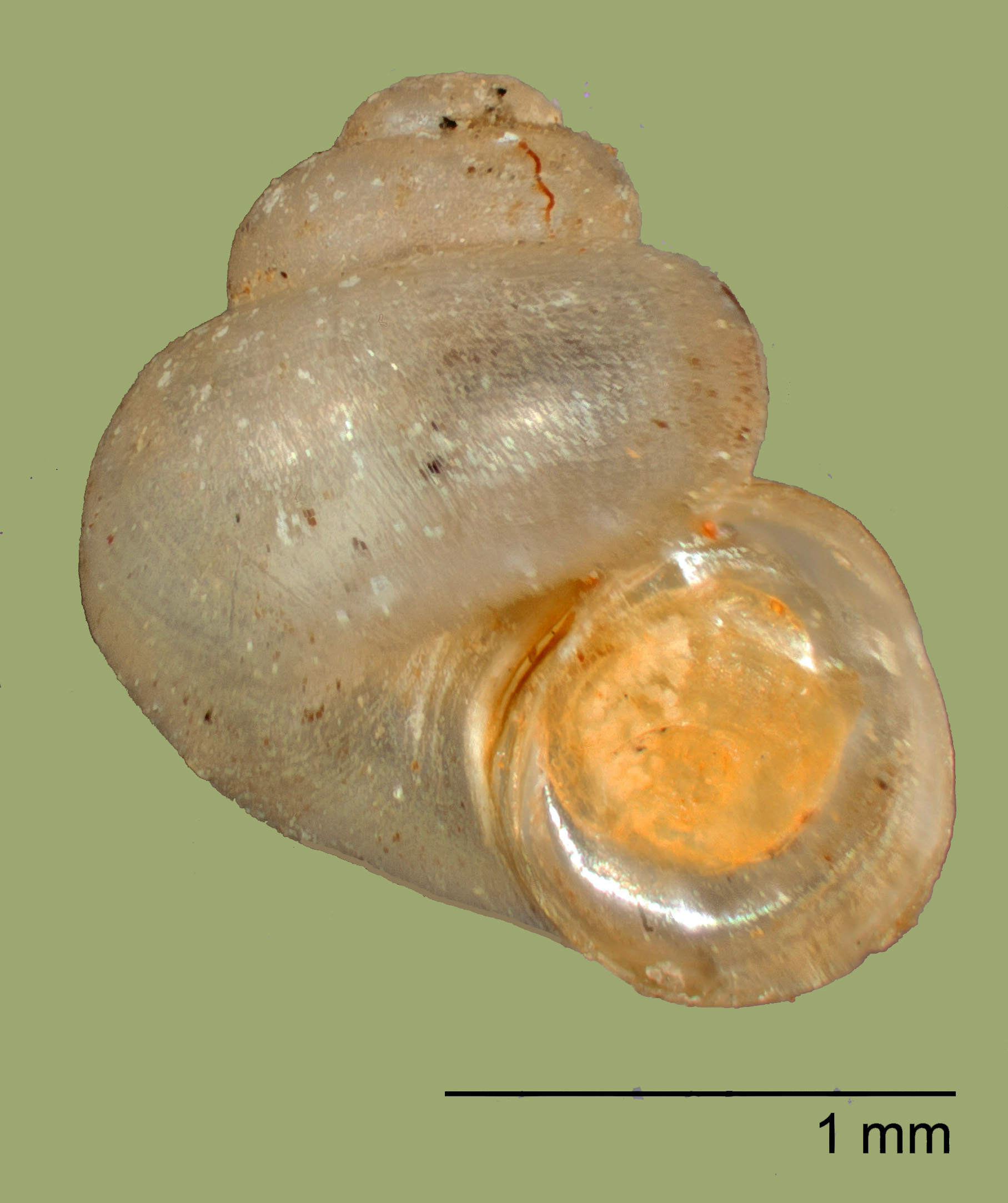
Hubricht (1971) described the animal as white and blind, being a penis simple, tapering to a point, without appendages. The absence of a second, accessory lobe on the penis (as characteristic of Amnicola) led him to propose a new genus, Antrobia. The 1.8 mm holotype shell (FMNH 164171) is figured above, courtesy of the Field Museum of Natural History.
Burch (1989) allocated Antrobia to the hydrobiid subfamily Lithoglyphinae on the basis of penial morphology. The detailed anatomical analysis of Hershler & Hubricht (1988) suggested cochliopine affiliations, however, leading Hershler & Thompson (1992) to transfer the genus into the hydrobiid subfamily Cochliopinae. Although not treated by Wilke et al. (2013) in their (molecularly-driven) revision of the hydrobioid taxa, Antrobia was then carried passively into the newly-elevated Cochliopidae.
However. The study of Hershler and Hubricht (1988) documented striking anatomical similarity between Antrobia and a second monotypic genus of cave-dwelling hydrobioids, Antroselates, described by Hubricht (1963) from Kentucky. Antroselates was treated by Wilke et al. (2013), and was transferred on the basis of mtDNA sequence from the Cochliopidae to the Amnicolidae. Thus, the current assignment of Antrobia to the Cochliopidae should be considered tentative, here 50 years after its description.
> Maps and Supplementary Resources
> Essays
- I wrote an essay on 22Aug07 about a hunt for the troglobitic hydrobiid Holsingeria unthanksensis in southwest Virginia, offering some observations likely relevant to the biology of Antrobia as well. See Cave Snail Adventure.
- Earlier versions of this website, online until 18Aug16, adopted the large, broadly-inclusive concept of the Hydrobiidae (sl) following Kabat & Hershler (1993). More recently the FWGNA project has shifted to the Wilke et al. (2013) classification system, distinguishing a much smaller Hydrobiidae (ss) and elevating many hydrobioid taxa previously ranked as subfamilies to the full family level. For more details, see The Classification of the Hydrobioids.
> References
Ashley, D.C. (2003) A final report on the monitoring project to evaluate the population status of the Tumbling Creek cavesnail, Antrobia culveri (Gastropoda, Hydrobiidae). U.S. Fish & Wildlife Service, Columbia, MO. 93 pp.
Burch, J.B. (1989) North American Freshwater Snails. Malacological Publications, Hamburg, MI. 365 pp.
Greenlee, R.E. (1974) Determination of the range of the Tumbling Creek cavesnail. Missouri Speleology 14: 9 11.
Hershler, R. H. & J. R. Holsinger (1990) Zoogeography of North American hydrobiid cavesnails. Stygologia 5: 5-16.
Hershler, R. and L. Hubricht (1988) Notes on Antroselates Hubricht 1963 and Antrobia Hubricht 1971 (Gastropoda: Hydrobiidae). Proceedings of the Biological Society of Washington 101: 730 740.
Hershler, R. & F.G. Thompson (1992) A review of the aquatic gastropod subfamily Cochliopinae (Prosobranchia: Hydrobiidae). Malacological Review Supplement 5: 1 - 140.
Hubricht, Leslie (1963) New species of Hydrobiidae. Nautilus 76: 138 - 140.
Hubricht, Leslie (1971) New Hydrobiidae from Ozark Caves. Nautilus 84: 93 96.
Kabat, A.R., and R. Hershler (1993) The prosobranch snail family Hydrobiidae (Gastropoda: Rissooidea): review of classification and supraspecific taxa. Smithsonian Contributions to Zoology 547:1-94.
Liu, H-P., R. Hershler & F.G. Thompson (2001) Phylogenetic relationships of the Cochliopinae (Rissooidea: Hydrobiidae): An enigmatic group of aquatic gastropods. Molec. Phyl. Evol. 21: 17 - 25.
McKenzie, P.M. (2003) Tumbling Creek cavesnail (Antrobia culveri) recovery plan. U.S. Fish & Wildlife Service, Ft. Snelling, MN. 97 pp.
Wilke T., Haase M., Hershler R., Liu H-P., Misof B., Ponder W. (2013) Pushing short DNA fragments to the limit: Phylogenetic relationships of hydrobioid gastropods (Caenogastropoda: Rissooidea). Molecular Phylogenetics and Evolution 66: 715-736.
Wu, S-K., R.D. Oesch, and M.E. Gordon (1997) Missouri Aquatic Snails. Missouri Department of Conservation Natural History Series No. 5. 97 pp.