
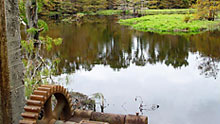
Both the Atlantic and the Gulf drainages of Georgia are covered, through the Florida panhandle... more
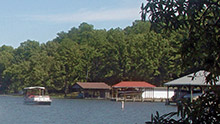
The four ecoregions of North Carolina drain toward the Atlantic through six major river systems... more
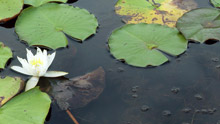
Although perhaps not as environmentally heterogeneous as neighboring states, South Carolina does include... more
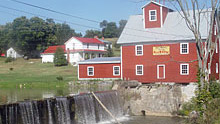
The survey reported here is focused on the eastern 75% of the state, draining from the Blue Ridge to the Atlantic... more
All waters draining into the Tennessee River above the Alabama line, including SW Virginia, W North Carolina, and N Georgia... more
A study area of approximately 150,000 km2, including Delaware, Maryland, New Jersey, eastern Pennsylvania and the West Virginia panhandle... more

A survey of all waters draining into the Ohio River upstream from the mouth of the Tennessee/Cumberland at River Mile 920... more
> Habitat & Distribution
Hershler et al (1990) mapped the range of Fontigens aldrichi as extending through the Ozark Highlands of eastern Missouri from just south of St. Louis to the Arkansas border, in tributaries of the Missouri, St. Francis, and White/Arkansas Rivers. This range was confirmed by Wu et al (1997).
Like all members of the genus, F. aldrichi populations reach maximum abundance on solid substrates in springs, spring runs, and caves. Population densities become rapidly attenuated downstream, as though dependent on constant temperature or some other unique aspect of the spring environment. FWGNA incidence rank I-4, common.
> Ecology & Life History
We are not aware of any good study on the life history of F. aldrichi. But populations of all North American Fontigens species typically seem to maintain constant densities year-round, as though reproduction might be continuous. Weck (2022) reported approximately one year to maturity (3 mm) in laboratory populations of the cave-dwelling Fontigens antroecetes, constant low levels of reproduction (25 - 80 eggs/pair/yr), and a lengthy hatch time of 70 - 80 days.
> Taxonomy & Systematics
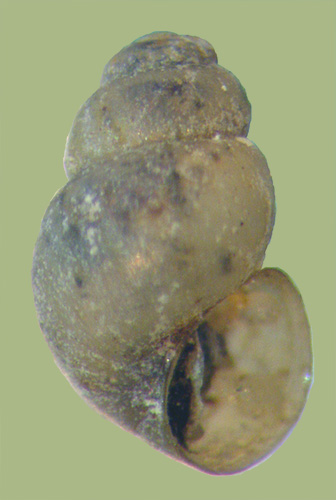
Call & Beecher (1886) described Bythinella aldrichi from a small spring and brooklet, tributary to the Black River, in the Ozark Mountains, Reynolds County, Missouri. The species was shifted to Pilsbry s (1933) Fontigens by Craig (1975). The image of the 2.3 mm paratype shell above (USNM 74116) is reproduced courtesy of the National Museum of Natural History.
Fontigens aldrichi was one of the nine species reviewed by Hershler, Holsinger, and Hubricht in their splendid monograph of 1990. A detailed shell-morphological analysis of all nine Hershler species has been contributed by Gladstone et al (2021). The penis is tripartite, bearing two accessory lobes with tubular glands. On this basis, Hershler and colleagues joined it with F. nickliniana and F. turritella into a nickliniana group. Alas, F. aldrichi was omitted from the mtDNA sequence study of Liu and colleagues (2021), an oversight for which we apologize.
Taylor (1966) suggested that Fontigens comprises a distinct hydrobiid subfamily, the Fontigentinae, which Hershler et al. (1990) synonymized under the Emmericiinae of Brusina (1870). Wilke et al. (2013) did not confirm a close association between Fontigens (represented by but a single sample) and the European genus Emmericia, however, tentatively returning the Fontigentinae to subfamilial status. Despite this evidence, self-appointed experts insisted on placing Fontigens in the Emmericiidae for several years (Bouchet et al. 2017), until Gladstone & Whelan (2022) split the genus to its own separate family, the Fontigentidae.
> Maps and Supplementary Resources
> Essays
- Earlier versions of this website, online until August of 2016, adopted the large, broadly-inclusive concept of the Hydrobiidae (sl) following Kabat & Hershler (1993). More recently the FWGNA project has shifted to the Wilke et al. (2013) classification system, distinguishing a much smaller Hydrobiidae (ss) and elevating many hydrobioid taxa previously ranked as subfamilies to the full family level. For more details, see The Classification of the Hydrobioids.
- See my essay of 9Aug22, Startled by Fontigens, sort-of, I suppose for a review of the paper by Liu et al. (2021) documenting unusually high levels of intraspecific mtDNA sequence divergence among populations of Fontigens throughout eastern North America.
> References
Bouchet, P., J. Rocroi, B. Hausdorf, A. Kaim, Y. Kano, A. Nutzel, P. Parkhaev, M. Schrodl, and E. Strong (2017) Revised classification, nomenclator and typification of gastropod and monoplacophoran families. Malacologia, 61: 1 526.
Call, R.E. and C.E. Beecher (1886) Description of a new rissoid mollusk. Bulletin of the Washburn College Laboratory of Natural History 1: 190 192.
Craig, J.L. (1975) A checklist of the invertebrate species recorded from Missouri subterranean habitats. Missouri Speleology 15: 1 10.
Gladstone, N.S., E. Pieper, S. Keenan, A. Paterson, M. Slay, K. Dooley, A. Engel, and M. Niemiller (2021) Discovery of the Blue Ridge springsnail, Fontigens orolibas Hubricht 1957 (Gastropoda: Emmericiidae) in East Tennessee and its conservation implications. Freshwater Mollusk Biology and Conservation 24: 34 - 42.
Gladstone, N. S. and N. Whelan (2022) Pushing barcodes to their limits: phylogenetic placeament of Fontigens Pilsbry, 1933 (Caenogasatropoda: Littorinimorpha: Truncatelloidea) and elevation of Fontigentidae Taylor, 1966. Journal of Molluscan Studies 88: eyab038.
Hershler, R. H. & J. R. Holsinger (1990) Zoogeography of North American hydrobiid cavesnails. Stygologia 5: 5-16.
Hershler, R., J.R. Holsinger & L. Hubricht (1990) A revision of the North American freshwater snail genus Fontigens (Prosobranchia: Hydrobiidae). Smithsonian Contributions to Zoology 509:1-49.
Kabat, A.R., and R. Hershler (1993) The prosobranch snail family Hydrobiidae (Gastropoda: Rissooidea): review of classification and supraspecific taxa. Smithsonian Contributions to Zoology 547:1-94.
Liu, H-P., L. Schroeder, A. Berry, and R. T. Dillon, Jr. (2021) High levels of mitochondrial DNA sequence divergence among isolated populations of Fontigens (Truncatelloidea: Emmericiidae) in eastern USA. Journal of Molluscan Studies 87: eyab026. [pdf]
Pilsbry, H.A. (1933) Amnicolidae from Wyoming and Oregon. Nautilus 64: 37 39.
Taylor, D.W. (1966) Summary of North American Blancan nonmarine molluscs. Malacologia 4: 1 - 172.
Weck, R.G. (2022) Life history observations of the Illinois state endangered Enigmatic Cavesnail, Fontigens antroecetes (Hubricht, 1940) made under simulated cave conditions. Subterranean Biology 43: 185 - 198.
Wilke T., Haase M., Hershler R., Liu H-P., Misof B., Ponder W. (2013) Pushing short DNA fragments to the limit: Phylogenetic relationships of hydrobioid gastropods (Caenogastropoda: Rissooidea). Molecular Phylogenetics and Evolution 66: 715 736.
Wu, S-K., R.D. Oesch, and M.E. Gordon (1997) Missouri Aquatic Snails. Missouri Department of Conservation Natural History Series No. 5. 97 pp.