
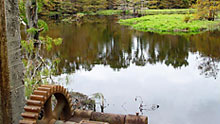
Both the Atlantic and the Gulf drainages of Georgia are covered, through the Florida panhandle... more
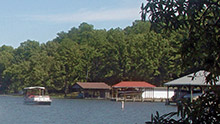
The four ecoregions of North Carolina drain toward the Atlantic through six major river systems... more
Although perhaps not as environmentally heterogeneous as neighboring states, South Carolina does include... more
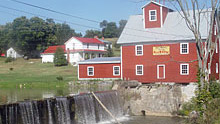
The survey reported here is focused on the eastern 75% of the state, draining from the Blue Ridge to the Atlantic... more
All waters draining into the Tennessee River above the Alabama line, including SW Virginia, W North Carolina, and N Georgia... more
A study area of approximately 150,000 km2, including Delaware, Maryland, New Jersey, eastern Pennsylvania and the West Virginia panhandle... more

A survey of all waters draining into the Ohio River upstream from the mouth of the Tennessee/Cumberland at River Mile 920... more
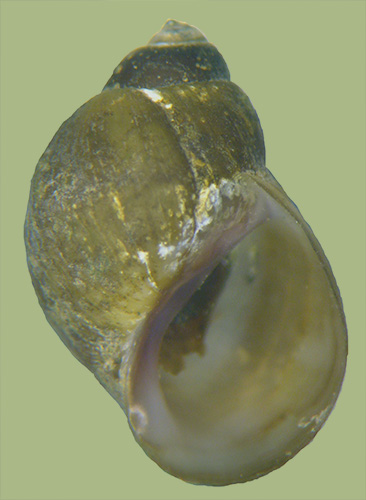
> Habitat & Distribution
Goodrich (1939) restricted the range of L. arkansensis to the "White River, Baxter County, Arkansas, and North Fork White River, east of Richville, Douglas County, Missouri. Wu and colleagues (1997) confirmed the latter half of that range, logging just four L. arkansensis records in the entire Show Me State: two in Douglas County and two in Ozark County, all in the North Fork White drainage at the southern border. Our survey has added a fresh record in the Big Piney River, a tributary of the Gasconade River in Pulaski County.
As is typical of Leptoxis generally, populations of L. arkansensis reach maximum densities grazing on rocks in the riffles of cold, well-oxygenated rivers and streams. FWGNA incidence rank I-2, rare.
> Ecology & Life History
Grazing by populations of pleurocerids can have a significant effect on energy flow in small streams (Dillon 2000: 86 - 91, see also Dillon & Davis 1991).
Like other pleurocerids, L. arkansensis is dioecious, eggs being deposited on hard substrates from spring to mid-summer. Whelan and colleagues (2015) described a peculiar egg-laying behavior in L. arkansensis they termed clutch dragging, the female pulling a mass of eggs behind her foot while depositing eggs singly. Whelan also observed near-complete mortality in his aquarium population of L. arkansensis after egg-laying, suggesting semelparity, which would be unique in the Pleuroceridae.
> Taxonomy & Systematics
The species was originally described from the North Fork White River in Baxter County, Arkansas by Hinkley (2015) as Anculosa arkansensis. It was transferred to the genus Leptoxis by Burch (1989).
The 2013 Ph.D. dissertation of N. V. Whelan comprised six chapters, the fifth of which reported an extensive molecular phylogeny of the North American Pleuroceridae based on four genes (two mitochondrial and two nuclear) sequenced from 207 individuals sampled from 62 populations of 32 nominal species and subspecies. The population of Leptoxis arkansensis analyzed by Whelan (5 individuals) did not appear genetically related to any other Leptoxis population in North America. Rather, it was depicted as sister to Pleurocera potosiensis, a very similar pleurocerid widespread throughout the rivers and streams of the Ozark highlands, typically co-occurring with Leptoxis arkansensis.
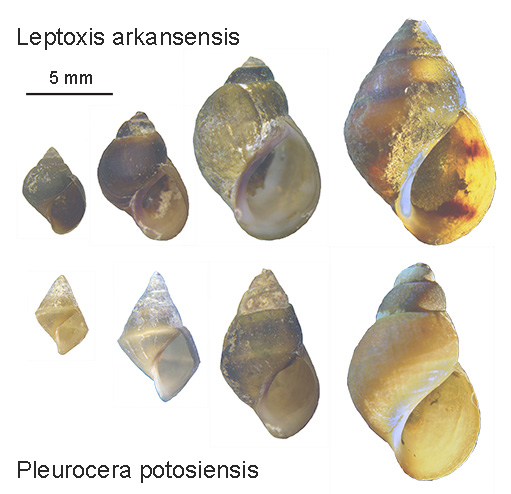
Whelan s (2013) finding was confirmed by his whole-genome anchored hybrid enrichment study of 2022. And indeed, simply on the basis of phenotype, the shell morphology of Leptoxis arkansensis and Pleurocera potosiensis is so similar that they may be difficult to distinguish at streambank where they co-occur (see below). It seems quite likely to us that the relatively large body whorl and reduced apex that led Hinkley, Goodrich and Burch to allocate arkansensis to the genus Leptoxis has evolved independently from that of the several other nominal Leptoxis species inhabiting rocky riffles east of the Mississippi River.
> Maps and Supplementary Resources
- Growth series of L. arkansensis and P. potosiensis.
> Essays
- See my essay of 9May23, Testing the Periwinkle Hypothesis, for an appreciation of N.V. Whelan's impressive (2013) DNA sequence data set drawn from 31 populations of Leptoxis sampled across eastern North America. Among the many important results of Nathan's phylogenetic analysis was his discovery that L. arkansensis and P. potosiensis are sister species.
- The evolutionary relationships among all six of the biological species of the genus Leptoxis were wonderfully revealed by the AHE phylogenomic study of Whelan et al (2022). For a review, see my post of 13Nov25, Anchored hybrid enrichment, Leptoxis lessons, and the advice of Queen Elsa.
> References
Burch, J.B. (1989) North American Freshwater Snails. Malacological Publications, Hamburg, Michigan. 365 pp.
Dillon, R. T. Jr. (2000) The Ecology of Freshwater Molluscs. Cambridge, Cambridge University Press. 509 pp.
Dillon, R. T. Jr., & K. B. Davis (1991) The diatoms ingested by freshwater snails: temporal, spatial, and interspecific variation. Hydrobiologia 210: 233-242.
Goodrich, C. (1939) The Pleuroceridae of the Mississippi River basin exclusive of the Ohio River system. Occasional Papers of the Museum of Zoology, University of Michigan 406: 1 4.
Hinkley, A.A. (1915) New Fresh-water shells from the Ozark Mountains. Proceedings of the U.S. National Museum 49: 587 590.
Whelan, N.V. (2013) Conservation, life history and systematics of Leptoxis Rafinesque 1819 (Gastropoda: Cerithioidea: Pleuroceridae). Ph.D. dissertation, University of Alabama, Tuscaloosa. 157 pp.
Whelan, N. V., Johnson, P. D., Garner, J. T., Garrison, N. L., & Strong, E. E. (2022). Prodigious polyphyly in Pleuroceridae (Gastropoda: Cerithioidea). Bulletin of the Society of Systematic Biologists, 1(2). https://doi.org/10.18061/bssb.v1i2.8419
Whelan, N. V., P.D. Johnson & P. M. Harris (2015) Life-history traits and shell morphology in the genus Leptoxis Rafinesque, 1819. J. Moll. Stud. 81: 85-95.
Whelan, N.V. & E. E. Strong (2016) Morphology, molecules and taxonomy: extreme incongruence in pleurocerids (Gastropoda, Cerithiodea, Pleuroceridae). Zoologica Scripta 45: 62-87.
Wu, S-K., R.D. Oesch, and M.E. Gordon (1997) Missouri Aquatic Snails. Missouri Department of Conservation Natural History Series No. 5. 97 pp.